Creating a Culture of Kindness

My heart aches when I hear of another suicide. It’s like the pain from many years ago of losing two loved ones to suicide comes rushing forward. Nothing can stop the aching. Time heals some wounds, but not this one.

The path forward for all of us is when we learn ways to become aware of others and their struggles. Aware of subtleties in behavior change that may include withdrawal from normal activities. Aware of the pain in the eyes. Aware of the catch in the voice when you ask, “How are you doing?”

The recently published NC Youth Risk Behavior Survey results are staggering.

  • 18% of high school students seriously considered attempting suicide,
  • 16% have planned to attempt suicide, and
  • 10% made a suicide attempt in the previous year.

Suicide is the ninth leading cause of death in the state, and the second leading cause of death for people ages 10 to 40.

In July 2025, leaders in North Carolina put together a Suicide Prevention Action Plan to cover 2026-2030. Some of the ideas that will be implemented include a youth advisory board that will share training information across the state, a community action committee that plans to meet monthly, as well as training for barbers and hairstylist to talk about suicide prevention with their clients.

Teenage years are stressful. Regular developmental changes coupled with other life events can put boys and girls at risk for depression and suicide. Johns Hopkins University statistics show that girls are more likely to attempt suicide than boys, but boys are four times as likely to succeed.

Getting Help for Your Suicidal Teen

If you notice signs of suicidal thoughts or plans, here are ways to help your teen:

  • Keep the lines of communication open and ask your teen directly if they are thinking of killing themselves if you notice any signs.
  • Listen to your child.
  • Encourage your teen to remain involved in their favorite activities.
  • Remove any potential suicide weapons.
  • Find a therapist in your area or, if you don’t know one, use and encourage your teen to use Crisis Text Online to text or chat with one.
  • In the event of an emergency, call 911.

“Be-A-Link” Save A Life!

It wasn’t that long ago when Green Hope High School dealt with two student deaths from suicide. At that time, I was the PTA President and knew our community needed a path forward, a way to heal. We pulled a community of parents and students together and drafted a plan for a memorial walk that raised money to implement a Yellow Ribbon Suicide Prevention program that we established in Western Wake County. Volunteers were trained to share the steps to “Be-A-Link” Save A Life!

Over the next few weeks, I volunteered time talking with students in high schools and churches encouraging students that it’s OK to ask for help. We also encouraged students to take these steps if they felt a friend was struggling:

  • Stay with the person – you are their lifeline
  • Listen, really listen. Take them seriously!
  • Get, or call, help immediately.

During one of the workshops, I noticed a young man who had come to earlier program. He approached me afterward to thank me. You see, after the first workshop, he noticed a friend was struggling. He kept chatting with the friend online while he called his mother over to find a way to get help to his friend while he kept the conversation going. With tears in his eyes (and in mine), he told me that his friend was alive because he stayed with them and really listened. More importantly, he had the little Yellow Ribbon card I had given him with the these numbers on it for his Mom to call that included the Hopeline: 919-231-4525

Today, we can just call or text 988 to be a link and save a life.

The world is a better place because you are in it! Will join me today in creating a culture of kindness?

Additional Resources
Centers for Disease Control and Prevention (CDC), (2021, June 04). Suicide Prevention.
https://www.cdc.gov/suicide/prevention/index.html.

U.S. Department of Health and Human Services (HHS), National Strategy for Suicide Prevention. Washington, DC: HHS, April 2024. https://www.hhs.gov/programs/prevention-and-wellness/mental-health-substance-use-disorder/national-strategy-suicide-prevention/index.html

Suicide Prevention Resource for Action: A Compilation of the Best Available Evidence. Atlanta, GA: National Center for Injury Prevention and Control, Centers for Disease Control and Prevention. https://www.cdc.gov/suicide/resources/prevention.html

NC Violent Death Reporting System (NC-VDRS): https://injuryfreenc.dph.ncdhhs.gov/DataSurveillance/ViolentDeathData.htm


NC DPH Suicide and Self-Inflicted Injury Data: https://injuryfreenc.dph.ncdhhs.gov/DataSurveillance/SuicideData.htm


NC Disease Event Tracking and Epidemiologic Collection Tool (DETECT) Mental Health Dashboard (2023): https://ncdetect.org/mental-health-dashboard/


NC Non-Fatal Firearm ED Visit (NC-FASTER) Quarterly Reports: https://ncdetect.org/nc-faster-firearm-quarterly-reports/

If you believe your teen’s depression or suicidal thoughts or attempts are related to social media use or cyberbullying, contact the Social Media Victims Law Center today for a free consultation to learn more about how the organization can help you during this difficult time.

Cary Citizen of the Year, Barry Mitsch

When it comes to people who lead by example, you think of Barry Mitsch. He is humble, thoughtful, and kind in word and deed.

First and foremost, Barry is a Cary business owner. He is a co-founder of The Pyramid Resource Group, the first dedicated corporate coaching company in the United States. For more than 25 years, Barry has been involved in coaching leaders of leaders and their teams from a variety of industries, including pharmaceuticals, biotech, life sciences, healthcare, insurance, telecommunications, higher education, engineering, aerospace, and many others. We are fortunate to have his talents based in Cary.

Barry has given his leadership talents to serve the business community in a variety of ways, including: • Chairman, Cary Chamber of Commerce Board of Directors • Board of Directors, Cary Chamber of Commerce (2 terms) • Board of Directors, Greater Raleigh Convention and Visitors Bureau

From inspiring an Honor a Teacher Program at the Cary Chamber that has awarded more than $250,000 in grants over the years to Cary-area teachers to volunteering as a coach for the Miracle League of the Triangle, Barry has worked hard to ensure that community members have what they need to succeed.

Here is a short list of ways that Barry has made an impact: • Chair, Town of Cary’s Senior Advisory Board • Volunteer Coach, Miracle League of the Triangle • Co-Founder, Mitsch Family Foundation • Founder, Cary Chamber Honor a Teacher Program • Sponsor, Clara Knoll Teaching Award One of the ways Barry demonstrates hospitality is by serving as the Chair of the Town of Cary’s Sister City Commission. Barry is also known as a leader in his neighborhood and has served as a Past President and Board Member of Harrison Place Owners Association

Barry can be found coaching young people both on and off the field. His leadership is shown by serving in the following ways. • Chair and Founder, Cary Area Sports Alliance • Board of Directors, North Carolina Amateur Sports • Volunteer, Youth Leadership Cary and Leadership Cary

And if Barry’s leadership talents and encouragement aren’t enough, he literally gives his blood to others. Over the years, Barry has donated 10 gallons of blood through the Rex Blood Plan. So, whether you are 9 or 99, Barry has had an impact on making your life a little better in Cary.

Join us in congratulating Barry Mitsch as the 2025 Cary Citizen of the Year!

Cary Chamber began recognizing a Citizen of the Year of the year in 1971

1971 Mrs. Moxely

1972 R.O. Heater

1973 George King

1974 Pete Murdock

1975 Paul Cooper

1976 Ralph Ashworth

1977 Waldo Rood

1978 Charles Williams

1979 Koka Booth

1980 Fred Bond

1981 Daphne Ashworth

1982 Russell Buxton

1983 Roy E. Carawan

1984 Tyrine Woodlief

1985 Jane Moselly

1986 Jerry Miller

1987 Wythe Quarles

1988 Dick Ladd

1989 Harry Stephenson

1990 Bob Heater

1991 Ray Sparrow

1992 Regina McLaurin

1993 Koka Booth

1994 Herb Young

1995 Dr. Tom Brooks

1996 Wythe Quarles

1997 Chuck & Betty Smith

1998 Bill Coleman

1999 Koka Booth

2000 Steve Zaytoun

2001 Ann B. Goodnight

2002 John Rigsbee

2003 Melba Sparrow

2004 Mary Kamm

2005 Jim Goodnight

2006 Anthony Blackman

2007 The Ashworth Family

2008 Mike Curran

2009 Mike Winters

2010 Jack Smith

2011 Brian Reid

2012 Howard S. Johnson

2013 The Stephenson Family of Cary Oil

2014 Jennifer Robinson

2015 Ben Shivar

2016 George Jordan and the Jordan Family

2017 Howard Manning

2018 Mayor Harold Weinbrecht

2019 Tamara Barringer

2020 Joe Zaytoun

2021 Gale Adcock

2022 Don Frantz

2023 Sheila Ogle

2024 Liza Weidle

2025 Barry Mitsch

NC Women Business Owners Hall of Fame

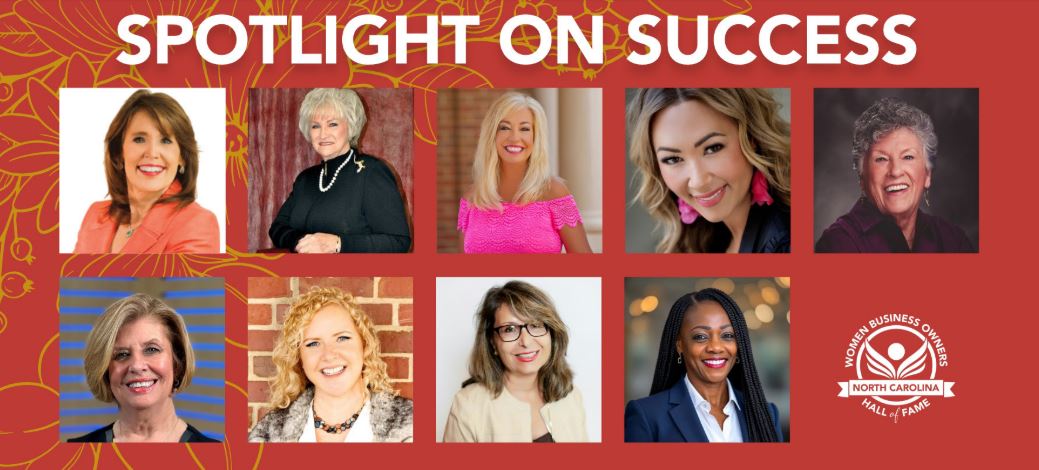
The excitement is building for the NC Women Business Owners Hall of Fame Gala! What an incredible honor to be recognized alongside such an accomplished and inspiring group of women. We want to extend our heartfelt congratulations to each of you on your induction into the NC Women Business Owners Hall of Fame, Class of 2025.

Your achievements, advocacy, and leadership have paved the way for so many others, and our CEO Liza Weidle is truly proud to be part of this remarkable class. As we draw closer to this special evening, we want to give you a glimpse into the incredible community you’ll be celebrating with.

  • Darleen Johns, a pioneering entrepreneur and trailblazer in North Carolina’s information technology industry. In 1979, she founded Alphanumeric Systems, a business solutions provider she grew into a global enterprise of more than 500 employees and $100 million in revenue before selling the company in 2009.
  • Jodi Hill Free, CEO and President of Platinum Business Solutions Inc.
  • Nikki Huebner, Founder Endure Beauty
  • Robbie Hardy, Founder xElle Ventures
  • Carrie Peele, has spent over 30 years lifting others as she climbed. Her legacy continues to inspire and shape the future of business in North Carolina.
  • Sally Webb Berry, past CEO The Special Event Company 
  • Trish Saemann, GoBeyond SEO
  • Terry Bradley Dunn – Advocacy Award, Chief Consulting Officer & Managing Tai-Lynn HR Solutions

Celebrate The Legacy With Us

Saturday, November 8, 2025 at 6:00 p.m.
The Umstead Hotel & Spa , a
Forbes Travel Guide 5-Star Hotel & 2025 Star Award Winner

Don’t miss this chance to celebrate the 8th annual class of the new NC Women Business Owners Hall of Fame!  Join us at the gala to hear their stories of impact and celebrate how they have:

  • Launched and scaled innovative businesses.
  • Led with vision and resilience through challenges.
  • Mentored and uplifted other women in their fields.
  • Made significant contributions to North Carolina’s economy and community.

This gala is a testament to their hard work and a celebration of the collective power of women in business. There’s still time to become a sponsor and align your brand with this prestigious event. Help us honor these remarkable women and invest in the future of women entrepreneurship. Every contribution, including one-time donations, to the NC Women Business Owners Hall of Fame makes a difference.

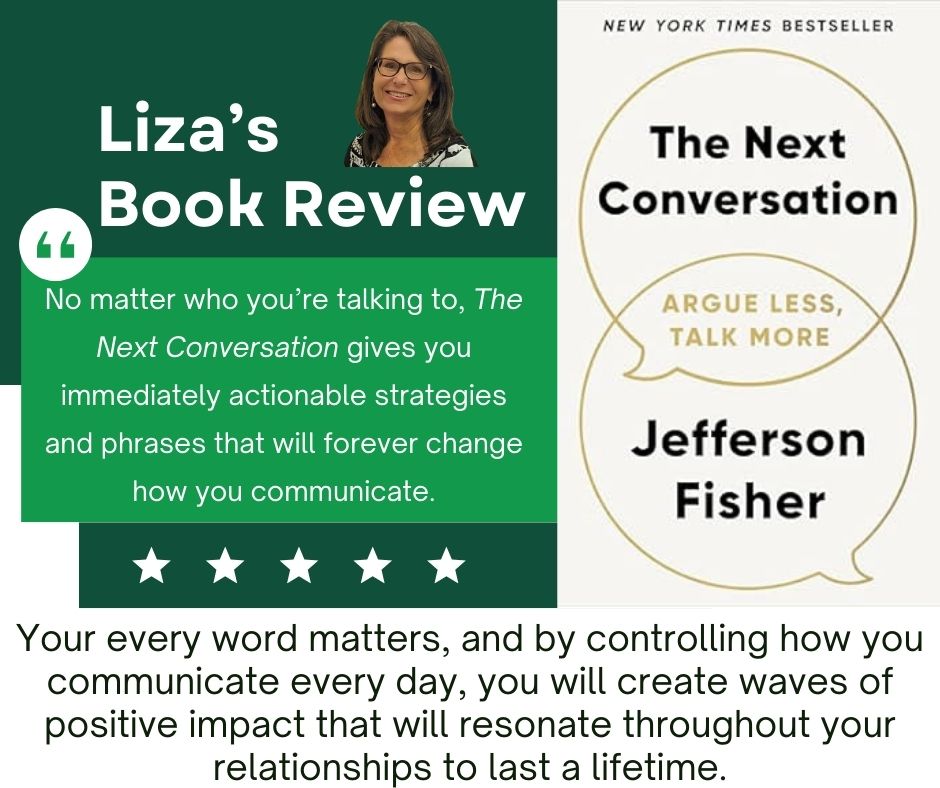
How to Argue Less, Talk More: Book Review “The Next Conversation”

Jefferson Fisher’s book “The Next Conversation” offers solid strategies and tips on ways to argue less and talk more. Jefferson reminds us that our words have ripple effects and offers tips on how powerful a pause can be before you respond.

It’s important to set goals for conversation. Don’t think of the conversation as a win or lose situation. “Winning means that you’ve likely lost something far more valuable – their trust, their respect, or worse, the connection. They only thing you’ve won is their contempt.”

The next step is to set values for a conversation. The overall aim is to connect, share, and grow stronger relationships. Jefferson highlighted his values and I think these two are good ones:

  • Where there is room for kindness, I will use it.
  • If I can’t be bridge, I’ll be a lighthouse.

If the conversation still becomes heated, you can take a break by breathing. “A well-timed pause credits you with the power of time. Time to reflect, time to reconsider, and time to regulate. Words that come after a deliberate choice of silence have more impact because they indicate that what follows has been measured, adding weight to the meaning. It’s like using the brakes on a car, controlling the speed of the interactions lets you safely steer it toward a more constructive outcome.”

Jefferson offers great examples for how to open difficult conversations and encourages a beginning that is direct and transparent. For bad news, you can try:

  • “This is going to be hard to hear.”
  • “I’ve got bad news.”

For sensitive topics, try:

  • “This isn’t going to be fun for either of us.”
  • “This isn’t going to be easy to talk about.”

Before your next conversation, consider reading Jefferson’s book first and follow him on Instagram for daily tips.

About Jefferson: Jefferson Fisher is a trial lawyer, writer, and speaker who helps people communicate during life’s everyday arguments and conversations. With his practical videos and authentic presence, Fisher has gained millions of followers around the world, including celebrities and global leaders. He is a sought-after speaker on communication at Fortune 500 companies and governmental agencies, and hundreds of thousands of people subscribe to his actionable email newsletter and podcast. Fisher is a Texas board-certified personal injury attorney and the founder of Fisher Firm, where he helps people all over the United States connect to trusted legal services.

Liza’s Book Review: “The Let Them Theory”

“We need to talk” are the three most anxiety producing words for me. I can obsess endlessly about what I possibly said or did in the last few days (or years depending on the relationship) that could be the topic for the discussion.

Help comes from reading books as well as listening to podcasts from Mel Robbins on “The Let Them Theory.”

Mel’s “Let Them” theory is not about letting go of relationships, it’s about protecting your boundaries and finding peace in the relationships. If you can learn to master the let them approach, you can redesign your life to not worry about things out of your control and to experience life on your own terms.

Two of the chapters in Mel’s book gave me insights in how to really help someone who is struggling. I tend to go all-in to attempt a rescue that often does much more harm than good. The reality is that people will only get better when they are ready. I always seem to be ready before they are. It doesn’t mean I can’t help. Nor does it mean I don’t step in when someone is doing something dangerous or self-destructive.

Struggling friends need my love and support, but they don’t “need” for me to rescue them.

  • I can’t make them get sober.
  • I can’t heal them.
  • I can stop enabling.
  • I can share resources (not money) and tools for them to choose to do the work to get better.

“You owe people love, acceptance, and compassion. You do not owe them money. Because if you’re funding any aspect of someone’s life while they continue to refuse treatment – you are part of the problem. Money without specific conditions to be sober or go for treatments is enabling,” from “The Let Them Theory.”

I am learning better ways to share resources and then to step back and “let them” work through their anxieties and fears to choose a different path. “Let them” doesn’t mean leave them alone. I can drop off a dinner or send a care package or make a playlist of songs or pray with them. The possibilities of “let me” are probably endless, but not enabling and allow me to protect my peace.

I appreciate that Mel ends each chapter with a summary. “Believe in other’s ability to heal and create an environment where change is possible.” Mel also encourages you to take the next most important step, “Let me.”

  • Let me be who I truly am.
  • Let me set boundaries that protect my peace.
  • Let me choose relationships that uplift and inspire me.

“Let Them” is a simple tool and Mel offers added insights with short clips on her Instagram as well as through podcasts. Check it out and let me know you what you thought.

About Mel Robbins: #1 New York Times best-selling author and a world-renowned expert on mindset, motivation, and behavior change, whose work has been translated into 50 languages. With millions of books sold, seven #1 Audible titles, and billions of video views, Mel’s impact is truly global.

Coming soon, Liza’s book review on Jefferson Fisher’s book “The Next Conversation.”


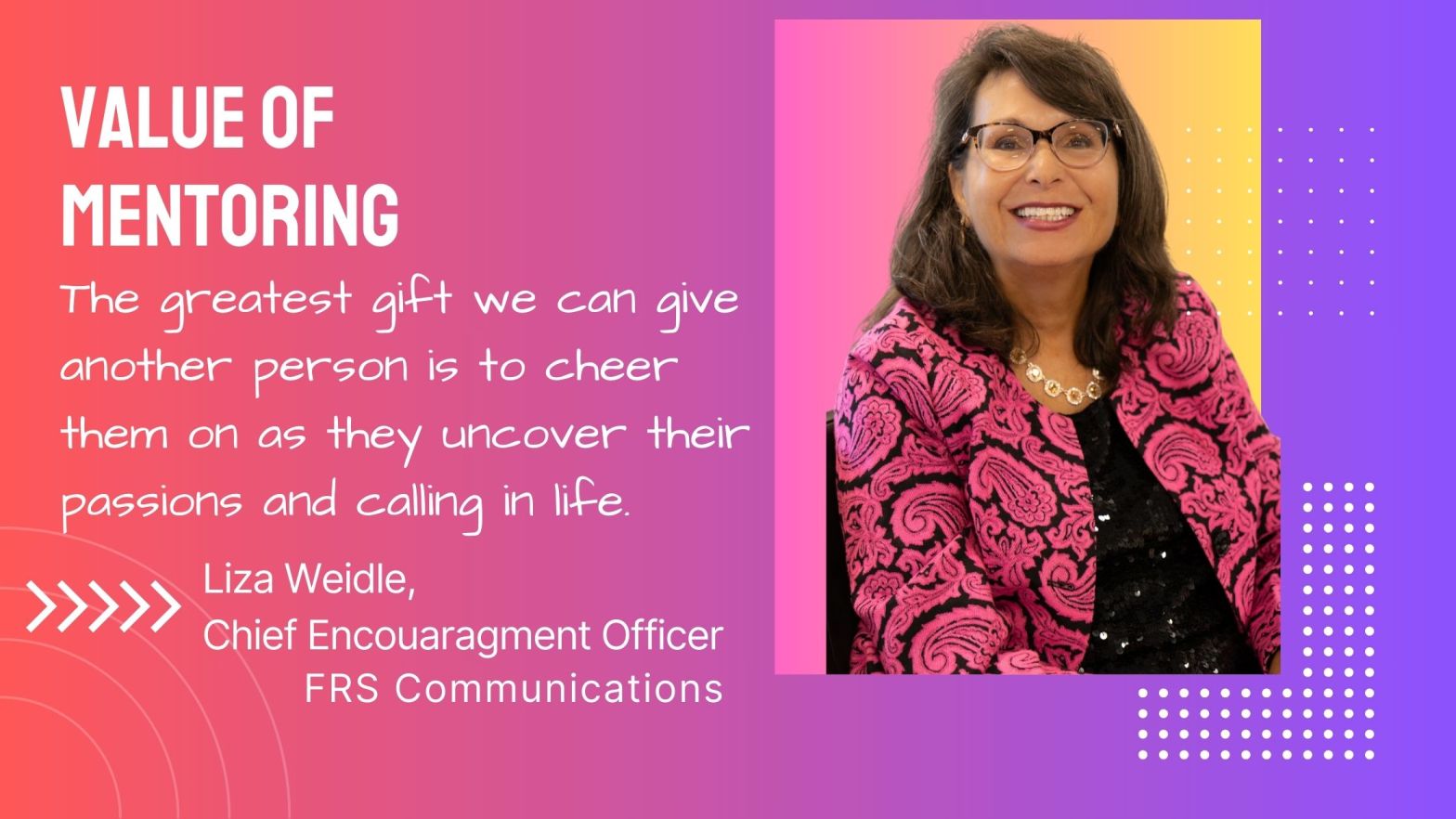
Value of Mentoring

The greatest gift we can give another person is to cheer them on as they uncover their passions and calling in life.

At every stage of my career, I had a mentor. I sought out people who energized and inspired me. They took the time to engage in meaningful conversations that helped me learn and grow. They didn’t always say “yes” and often helped me to think more critically about the future. The solutions they offered weren’t quick ones and often challenged my assumptions.

My favorite mentors helped me discover my underlying passions and calling in life. They have been anchors who guided me in volunteer efforts and became lifelong friends.

As I lean into a new season of life, it’s time for me to offer the same value of mentoring that I received from others. I want to inspire people to become fuller versions of who they are. At the end of February, I have the honor of being selected for the Triangle Business Journal’s Mentoring Monday. This opportunity is a little different than other mentoring relationships because of the speed of the event. I am hoping that the connections made will linger longer than the 15 minutes offered for each round.

The shorter rounds allow time to focus on character instead of job skills and competency. As we each become more self-aware of the value we can add to each other, we can truly become better in our jobs as well as relationships. Won’t you join me?

Register today for Triangle Business Journal‘s Mentoring Monday on February 24 from 4 to 6 p.m. at TowneBank Center in Raleigh.

Lessons Eleven and Twelve: How People Change

The “How People Change” study by Timothy S. Lane and Paul David Tripp “is not one that comes naturally for us. It’s hard for us to connect the ways we think, feel, and act in the midst of struggle with our ultimate destination of life in heaven with Christ. It is a work of the Spirit in our lives. But when we learn how to respond to that work, the impact on our lives is enormous.” These videos are a part of a CtK Study and are shared for participants who missed the earlier sessions.

Fruit 1: Real Heart Change

Big Question: What type of heart produces good fruit?

Video: 30 minutes

Lesson 11: How People Change

Discuss

Ezekiel 36:24-26

  • A new heart is capable of change
  • Do you believe real change is possible?

Hebrews 4:12-13

  • Not anger management, but worship realignment

1 Samuel 16:6-7

Psalm 139:23-24: Search me, God, and know my heart; test me and know my anxious thoughts.See if there is any offensive way in me,  and lead me in the way everlasting.

Central Point: God’s primary concern is obedience from the heart, not outward conformity to his law.

Personal Application: I need to pay attention to the issues of my heart as I seek to live in a godly way.

Relational Application: As I seek to help others, I want to celebrate good fruit in their lives even as I help them examine the beliefs that drive their good behavior.

Make it real: Has your Christian life been characterized by external obedience and minimal focus on your heart and your relationship with God? Examine all that you do. Are your activities motivated by a loving, grateful heart?

Fruit 2: New and Surprising Fruit

Big Question: Where is God calling you to embrace your potential as his child, and to be committed to the growth of new fruit that only his grace can produce? As you respond in new ways, how will your situations and relationships be changed?

Video (24 mins)

Lesson 12: How People Change

Discuss

Psalm 4

Cluster 1

  • I will live with personal integrity
  • I will seek godly help
  • I will express godly emotions

The life of faith is a stained-glass window, rich with the color of many different emotions, through which the light of Christ shines

Cluster 2

  • Means being ready, willing, and able to forgive
  • Means humbly asking for forgiveness
    • Here is what it sounds like: “I was wrong for _________. Please forgive me. I am sorry for the pain I caused you.”
  • Means responding to the sin and weakness of others with grace.
    • Do you hold people to higher standards than you hold yourself?
    • Do you tend to forget that you are a sinner, while remebering that others are?
    • Do you fail to overlook minor offenses?
    • Do you spend more time catching people doing wrong than doing right?
    • Are you better at  critizing than encouragine?
    • How do you tend to respond to the weaknesses, sins, and failures of those around you?

Cluster 3

  • God’s grace gives purpose and direction to my words and actions
    • Grace enables each of God’s children to make peace.
    • …to speak the truth
    • …to serve others
    • …to grant forgiveness
    • …to learn to say no
    • …to recognize, develop, and use the gifts he has given for his glory and the good of others.

Col 3:12-16

Central Point: Every Christian has the living water of the Holy Spirit flowing within and is already a fruit tree growing amid the heat of life’s circumstances.

Personal Application: The fruit tree response God calls me to are not impossible goals, but the result of the Spirit’s work in me as a child of God.

Relational Application: I must help others to look at themselves with hope because the living water of Christ’s Spirit flows within them.

The “How People Change” study guide is written by Timothy S. Lane and Dr. Paul David Tripp who is a pastor, international event speaker, and a best-selling and award-winning author. With more than 30 books and video series on Christian living, Paul’s driving passion is to connect the transforming power of Jesus Christ to everyday life. Click here to view videos and podcasts featuring Dr. Tripp. 

Click here for the How People Change series of blogs.

Literary Connections – Elevate your bookshelf with our panel of authors!

Welcome to Literary Connections – Elevate your bookshelf with our panel of authors! Join us for a fun and engaging event where you’ll get the chance to meet and interact with some of your favorite writers. This in person event will take place at City Club Raleigh, so mark your calendars and get ready for an unforgettable experience. As our Moderator, Crash Gregg, leads us through the event, enjoy hearing from authors Liza Weidle, Carmen Wimberley Cauthen, John Samuel, Tim Brown, and Holly Richard. There will be time after the panel discussion to purchase books and have them signed. Don’t miss out on this opportunity to connect with fellow book lovers and discover new literary gems!

Register at this link: https://www.eventbrite.com/e/literary-connections-elevate-your-bookshelf-with-our-panel-of-authors-tickets-949342217127?aff=oddtdtcreator

Provided Author & Moderator Bios:

Author Liza Weidle is the FRS Communications CEO – Chief Encouragement Officer. She has more than two decades of experience encouraging and working with nonprofits, business leaders and the community to make an impact that brings return on investment. Liza stays on top of the hottest social media and content trends. She is known as an influencer who builds relationships with thought leaders, maintains an active blog, and interacts across social media to leverage initiatives that make the world a better place. Liza has an unique perspective on media that comes from working as the NBC-17 Education Reporter, News and Observer Columnist, and Talent Acquisition Officer for Curtis Media Group. Liza’s columns were published for years in The News and Observer and some are captured in her book, “The Truth about Parenting: Navigating the Elementary Years.” Liza is also the author of “Grandpa’s Whit and Wisdom,” a collection of essays and sermons that are as timely today as they were when written in the early 1900s.

Author Tim Brown is an award-winning journalist and book author, most recently as a national baseball columnist at Yahoo Sports for 13+ years. In 2017, received the top award as national beat writer by the Associated Press Sports Editors. As a sports columnist for the past 30-plus years at Yahoo Sports and the Los Angeles Times, with a national reputation for writing award-winning human interest stories, wrote features and stories on everyone from Mike Trout to Derek Jeter to Kim Ng, covered cultural issues in sports from steroids to the under representation of Black baseball players, and some of the local efforts to elevate underprivileged youth players, as well as women rising through the ranks of the league. Additionally, earlier in my career, covered the Los Angeles Lakers for the Los Angeles Times for five years, writing hundreds of stories and front-page features about the storied championship team in the era of Phil Jackson, Kobe Bryant and Shaquille O’Neal.

Author Holly Richard began her career in the disability field in the early 1990’s and has served in executive leadership roles for several nonprofits in North Carolina for the past 22 years. In 2012, she became President and CEO of tlc, (formerly the Tammy Lynn Center) in Raleigh. After Holly’s son Derek passed away from Glioblastoma in April 2019 at the age of 28, she stepped away from the TLC in November of that year to deal with the devastating loss of her son and to be with family as they began their grief journey. Holly spent three long years, writing a book about the death of her son and the grief that followed and became a first-time author, publishing her book in November 2021, One Hundred and Twenty-Six Days, The Unthinkable Journey. Holly is the Special Projects Advisor for The Arc of NC, a 70+ year old statewide advocacy nonprofit organization supporting individuals with intellectual and developmental disabilities. Holly was recently appointed to the Advisory Board of the Preston Robert Tisch Brain Tumor Center at Duke Hospital in Durham where her son received treatment. Holly dedicates her personal time and service to advance brain tumor research and funding at the state and national levels while also helping people who have experienced the unimaginable and who are navigating their grief journey.

Author Carmen Wimberley Cauthen learned the value of history and family legacy growing up as a child. A Black native of Raleigh, she has always recognized that only some of the stories have been told. While writing the Journal for the North Carolina House of Representatives, she realized that truth is many sided and what is generally shared is only what is comfortable to hear. Her work as a family historian, racial equity advocate, and truthteller is helping to raise awareness of the roots of erasure in the Black community’s history. Her main desire is to record the truth of all history as opposed to only one side. She reminds us all that “my history, our history” is one of the most valuable lessons that we can learn.

During his college years, Author John G Samuel was diagnosed with a degenerative eye condition known as Retinitis Pigmentosa (RP), informed that he was going blind with no cure in sight. He concealed this from friends, professors, and employers for 17 years. Believing that someone who was blind could not possibly live in his hometown of Cary, North Carolina, he left. His quest for a career and love took him around the globe to places such as Bangalore, New York, Douala, Kampala, and Washington. Yet, it was a serendipitous encounter that eventually led him back home, where he learned to accept his disability and find what he had been seeking all along—a sense of belonging. He wishes to share his story as a catalyst for change. He firmly believes that sharing his experiences can foster empathy and understanding in others. Through his storytelling, he aims to humanize the concept of inclusivity and demonstrate the incredible outcomes that stem from fostering a sense of belonging.

Our Moderator, Crash Gregg, is publisher for Triangle Downtowner Magazine, President of CSG Consulting, and an established residential/commercial real estate broker with Sotheby’s International Realty. He is always looking for new ways to save time and money by combining new technologies with existing business methods. Crash is a dedicated champion for local arts and nonprofits. He proudly serves on the boards for the State Capitol Foundation, City of Raleigh Museum, The Women’s Center, Glenwood South Collective, and Preservation Raleigh.

Lessons Nine and Ten: How People Change

The “How People Change” study by Timothy S. Lane and Paul David Tripp “is not one that comes naturally for us. It’s hard for us to connect the ways we think, feel, and act in the midst of struggle with our ultimate destination of life in heaven with Christ. It is a work of the Spirit in our lives. But when we learn how to respond to that work, the impact on our lives is enormous.” These videos are a part of a CtK Study and are shared for participants who missed the earlier sessions.

Lesson 9 – CROSS 1 – New Identity & New Potential

Big Question: In what specific ways are you failing to let the cross shape your situations and relationships? What would change in these areas if you lived in a more cross-centered way?

Video: 15 minutes

Lesson Nine: How People Change

Discuss:

Galatians 2:20 I have been crucified with Christ and I no longer live, but Christ lives in me. The life I now live in the body, I live by faith in the Son of God, who loved me and gave himself for me.

Your Potential: The Indwelling Jesus Christ

  1. The redemptive fact: “I have been crucified with Christ and I no longer live.
  2. The present reality: but Christ lives in me.”

Because of the work Christ did on the cross for us:

  1. We live with personal integrity.
  2. As recipients of grace, we will create a climate of grace in our relationships.
  3. We will act with courageous grace and constructive truth.

Central Point: Because Christ now lives in me, I have everything I need to respond in new ways to what I face daily.

Personal Application: I must consistently ask where God is calling me to respond to the heat in my life with a cross-centered perspective.

Relational Application: I must help others recognize the practical daily importance of remembering that Christ lives in them.

Make it real:

  • Where have you failed to live up to your full potential as a child of God? Where have you failed to take advantage of the wisdom, strength, and character that is yours because Christ lives within you? In what specific situations and relationships do you have God-given opportunities to exercise the new things that are yours in Christ?
  • Where, specifically, would a cross-centered perspective change your relationships? (Forgiveness? Patience and grace? Compassion and gentleness? Making peace? Speaking the truth? Humble service? Saying no?)

Lesson 10 – Cross 2: The Cross and Daily Living

Big Question: Who are you? What is your new identity? How does believing this help you to identify and repent of the heart sins beneath your behavioral sins? How does it help you move in new directions that are pleasing to God?

Video (21 Mins)

Lesson Ten: How People Change

Discuss

Lesson Nine’s point: we are new creations with new potential because of who Christ is and what he is doing in us by the work of his Spirit.

Lesson Ten: dealing with the reality of daily sin in our life.

The dominion of sin has been broken, but the presence of sin and struggle with sin remains.

New Foundation

1 John 2:1-2

My dear children, I write this to you so that you will not sin. But if anybody does sin, we have one who speaks to the Father in our defense—Jesus Christ, the Righteous One. 2 He is the atoning sacrifice for our sins, and not only for ours but also for the sins of the whole world.

Foundation of holiness #1 = justification by faith

Effect: We stand before the Father perfectly free from condemnation.

1 John 3:1-2

See what great love the Father has lavished on us, that we should be called children of God! And that is what we are! The reason the world does not know us is that it did not know him. 2 Dear friends, now we are children of God, and what we will be has not yet been made known. But we know that when Christ appears, r we shall be like him, for we shall see him as he is.

Foundation of holiness #2 = adoption

Effect: We relate to God as his children; he is our good, heavenly Father.

See Luke 15 – The Prodigal Son

Illustration: Living for comfort on the drive home  leading to irritation/anger  violation of the 6th commandments 

  • Problem: comfort is a good thing…it’s just not God.
  • Anecdote: living in light of the cross
  • “Comfort, when did you ever die for my sins?…”

Upshot: “I get rescued from myself…and my family gets rescued from me.”

Discussion

Central Point

  • Cross-centered lives that transform us into the likeness of Christ are characterized by repentance and faith, which look deeply at sin as well at the grace of Christ.
  • Deep repentance is the fruit of a continual reliance on Christ’s work on the cross for us.
  • Lasting change occurs when our heart’s idols are unmasked and rejected, as we rely instead on Christ.

Personal Application

  • To live a cross-centered life, I need to exercise a repentance and faith that sees the depth of my waywardness and the power and glory of my redeemer.
  • To change, I need to rely on my new legal status before God, which is mine because of what Christ has already done for me.
  • As I turn from my idols and turn to Christ, I can enjoy the freedom of faith and repentance in a new lifestyle that is pleasing to God.

Relational Application

  • Helping others live cross-centered lives involves helping them to see their ruling idolatries alongside the superiority of Christ.
  • To help others grow in holiness, I must link a clear call to repentance and faith to their new identity in Christ.
  • Biblical ministry calls me to help others unmask their idols (repentance) and encourage them to experience the joys of Christ’s work in their behalf (faith).

Make It Real

With your personal growth project before you, and in light of your typical ruling idolatries, what specifically about Christ do you need to see and believe as you engage in faith and repentance?

  • What about Christ is more attractive than what you have settled for?
  • What about Christ do you need to worship and adore? Be specific.

In light of your answers to questions 1 and 2, what passages of Scripture will help you see what you need to see about Christ?

  • Avoid picking single verses. Instead, choose larger portions of Scripture that address both what you need to see about Christ and what new behavior should follow.

The “How People Change” study guide is written by Timothy S. Lane and Dr. Paul David Tripp who is a pastor, international event speaker, and a best-selling and award-winning author. With more than 30 books and video series on Christian living, Paul’s driving passion is to connect the transforming power of Jesus Christ to everyday life. Click here to view videos and podcasts featuring Dr. Tripp. 

Click here for the How People Change series of blogs.

Lessons Seven and Eight: How People Change

The “How People Change” study by Timothy S. Lane and Paul David Tripp “is not one that comes naturally for us. It’s hard for us to connect the ways we think, feel, and act in the midst of struggle with our ultimate destination of life in heaven with Christ. It is a work of the Spirit in our lives. But when we learn how to respond to that work, the impact on our lives is enormous.” These videos are a part of a CtK Study and are shared for participants who missed the earlier sessions.

Lesson 7 – THORNS 1 – What Entangles You?

Big Question: How do I typically respond to the circumstances and relationships God has placed in my life right now? What happens as a result?

Video (26 mins)

Lesson Seven: How People Change

Discuss

  • Luke 6:43-46
  • Eph 4:17-26

Thorn Bush reactions to difficulty:

  1. Deny, avoid, escape
  2. Magnify, Expand, and catastrophize
  3. Become prickly and hypersensitive
  4. Return evil for evil
  5. Bogged down, paralyzed, captured
  6. Self-excusing, self-righteousness

Fruit Tree reactions to difficulty:

  1. Face reality
  2. Respond with appropriate intensity
  3. Be alert
  4. Constructive activity
  5. Remember that God comforts us with his presence and power and calls us to trust him.
  6. Remember that God calls us to obey and promises to bless us as we do.

In good and bad circumstances, we must ask, “What has God called me to do, and what has he provided in Christ to enable me to do it?”

Lesson 8 – THORNS 2 – Why Do You Get Entangled?

Big Question: What has captured your heart? What cravings, desires, and beliefs rule your heart, producing ungodly reactions?

Video (21 mins)

Lesson Eight: How People Change

Discuss

Romans 1:18-25

  • Your heart is the control system of your personhood…the causal center of the human being…the steering wheel of the human being.
  • You are – by your very nature – a worshiper.
  • Worship is an identity before it is an activity.
  • Worship: Something is always laying claim to the rulership of your heart. Your heart is always living for something.
  • We behave in wrong ways because God has been replaced.

Principle: Whatever rules the heart will exercise inescapable influence over your behavior.

James 4:1: What causes fights and quarrels among you? Don’t they come from your desires that battle within you?

Reality: When you are shaken by the issues of life, what comes out of you is what was already in you.

  • God intends for the shaking issues of life to reveal what is in us.

Our role: Trace the fruit (behaviors) down to the root issues of the heart.

Make It Real

Answer the following questions and look for common themes:

  • What things tend to function as replacements for God in my life?
    • What is my greatest nightmare? What do I worry about the most?
    • What, if I failed or lost it, would cause me to feel that I did not even want to live? What keeps me going?
    • What do I rely on or comfort myself with when things go bad or get difficult?
    • What do I think most easily about? What does my mind go to when I am free? What preoccupies me?
    • What unanswered prayer would make me seriously think about turning away from God?
    • What makes me feel the most self-worth? What am I proudest of?
    • What do I really want and expect out of life? What would really make me happy?

Email Liza to learn more or join the group that is meeting two Sundays a month during the Summer 2024. Click here for link to the blog for earlier sessions.

The “How People Change” study guide is written by Timothy S. Lane and Dr. Paul David Tripp who is a pastor, international event speaker, and a best-selling and award-winning author. With more than 30 books and video series on Christian living, Paul’s driving passion is to connect the transforming power of Jesus Christ to everyday life. Click here to view videos and podcasts featuring Dr. Tripp. 

Click here for the How People Change series of blogs.